
Sexual Harassment, 50 workplace examples is not a exhaustive list, if you have been subjected to this type of behaviour, you have rights, complain to the manager, complain to the HR department, complain to the owner, make your objection to this type of behaviour is known. If your demoted, forced out of your position, moved to your determent, you have rights under the Fair work Act.
You do not have to suffer in silence, many do. Why do many employees bring forward their complaints years latter?, because it eats away them, they cannot forgive themselves not not acting at the time. they feel more empowered as time goes on. In the meantime their life is in limbo, the perpetrator, has done well in life, been promoted, in part because you did not complain, tell the world, the employer what this person is really like.
Do not make the same mistake,
AWNA not here to cause unnecessary trouble, we here for you, to give clarity in your options. Perhaps empower you. We have many helpful articles in the blog page, read them, question them, email us, we don’t mind.
- Pressure for sexual favors
- Rape
- Attempted rape
- Sexual assault
- Attempted sexual assault
- Unwanted touching of body, clothing, or hair
- Unwanted hugging
- Unwanted kissing
- Sexual looks
- Sexual gestures
- Sexual comments
- Sexual jokes
- Sexual insults or taunts
- Repeated invitations on dates
- Massaging shoulders, neck, or back
- Patting someone’s body or head
- Inappropriate pinching
- Kissing sounds
- Cat calls or whistling
- Sexualized nicknames
- Intimate nicknames, such as ‘sweetie’, ‘honey’, ‘girl’, ‘babe’, ‘hunk’
- Questions or remarks about sex life
- Questions or remarks about sexual fantasies
- Questions or remarks about sexual history
- Questions or remarks about sexual orientation
- Comments about physical appearance
- Sharing sexual anecdotes
- Brushing up against someone
- Standing very close.
- Leaning over someone intimidatingly
- Staring or leering
- Winking
- Blowing kisses
- Sexually licking lips
- Looking someone up and down
- Blocking a person’s path
- Cornering someone
- Loitering near someone
- Following someone around
- Giving personal gifts
- Giving sexual gifts
- Displaying pornographic material in the workplace
- Sharing or distributing pornographic material
- Sexual text messages or emails
- Inappropriate comments on social media posts
- Offensive phone calls
- Indecent exposure
- Visiting someone’s home uninvited
- Inappropriately filming or taking photos of someone
- Threatening to share intimate images or film without consent.
Sexual harassment has to stop
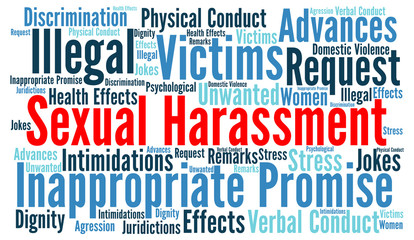
Women are the most common, but not the only, targets for sexual harassment.
There are basic patterns for sexual harassment, but those patterns do not capture the variations in experience by different groups of people and by workers in different sectors. The data shows that across all sectors, women of lower status are the most common targets of sexual harassment by perpetrators, who are typically men of higher status.
But sexual harassment in the workplace is by no means limited to this dynamic. Men, particularly those who don’t conform to traditional masculine norms, and others seen as outsiders, like LGBTQ and gender nonconforming people, can be targets. Women can be harassers. People of color, especially women of color, are more likely to be subject to sexual harassment than their white counterparts.
https://www.newamerica.org/better-life-lab/reports/sexual-harassment-severe-and-pervasive-problem/summary-of-findings/
Sexual harassment can happen to anybody by anybody. It is not one size fits all.
Sexual Harassment, 50 workplace examples
Sexual harassment can happen to anybody, just because its happened to you, don’t feel excluded, or left behind. This is not an exhaustive list, but prompters as to what constitutes sexual harassment, to act as a guide. People who engage in sexual harassment are allot cleverer than 10-20 years ago. In many cases now its allot more subtle. Everybody these days knows sexual harassment is no long tolerated and taken a lot more seriously than say even 3-5 years ago. However perpetrators however don’t give up. They have just got better as to the way they go around the sexual harassment. Grooming, chatting up, text messaging, social media stalking, the double talk are all more of a clever process now.
Domestic violence seems to have come into the workplace as workplace relationships break up. Now relationships in the workplace is as old as time. However the fall out seems to have turned increasingly violent. Employers are reluctant to get involved. However it can still be legally viewed as sex discrimination, possible victimisation, bullying and it times continued sexual harassment. You do not have to put up with these behaviors. There are various recourses open to you. (get advice)
Confused, feel you have been taken advantage of give us a call. We at A Whole New Approach (the owners of this web site), we are well known for the work we do. We are happy to give you some guidance, advise, its free, we are not sexual harassment lawyers, but experienced workplace advisors. We are proud of our staff and the outcomes they get for our clients.
We represent employees at the Fair work Commission, the various Human Rights and Equal Opportunity Commissions and Tribunals (QCAT, NCAT, VCAT amongst others) around Australia. We have been dealing with sexual harassment complaints since 2004. Look up what we do, the services we offer. We work in all states, Victoria, NSW, QLD, cities, Melbourne, Sydney, in fact anywhere, we are here to help.